
Is AI Out Over Its Skis?
Is AI Out Over Its Skis?
An Inflection Point — or Just an OpenAI Problem?
The Wall Street Journal dropped a bombshell yesterday: OpenAI, the privately held creator of ChatGPT, “recently missed its own targets for new users and revenue.” Even more troubling, the article reports that CFO Sarah Friar told other executives she is concerned the company may not be able to honor all of its capital spending commitments if the trend persists.
OpenAI officially disputed the article this morning, calling it “ridiculous” and insisting the company is firing on all cylinders. Markets aren’t buying it. Oracle fell more than 4% in early trading. Nvidia, Broadcom, and AMD each dropped 3–4%. Japan’s SoftBank — one of OpenAI’s largest backers — sank roughly 10%.
This is potentially a big deal, and Wall Street isn’t likely to keep whistling past the graveyard. The question for investors is: does this mark a major inflection point in the broad AI trade, or is this a ChatGPT problem?
The Numbers Are Staggering
OpenAI’s spending commitments to build out computing power are simply massive. CEO Sam Altman has said the company would spend roughly $1.4 trillion over the next eight years on data centers and compute. As part of that initiative, OpenAI signed a $300 billion, five-year agreement with Oracle for computing power. Nvidia, in turn, has pledged a $100 billion equity investment back into OpenAI. The deals are massive, expensive, and deeply intertwined.
And it isn’t just OpenAI. The four big hyperscalers — Microsoft, Alphabet, Amazon, and Meta — are collectively guiding to between $635 billion and $700 billion in capital expenditures in 2026. That’s a roughly 70% jump from 2025 levels, and the vast majority of it is aimed at AI. To finance the build-out, the group is expected to issue more than $400 billion in new debt this year — more than double last year’s pace.
That is a lot of free cash flow, and a lot of borrowed money, riding on one core assumption: that AI revenue will grow fast enough to justify the spending. The big question for the AI trade has always been whether these companies can monetize that investment. The OpenAI report puts that question front and center.
Is OpenAI Falling Behind?
ChatGPT was the first mover in generative AI, and for a while it was the only name anyone needed to know. That has changed. In the minds of many corporate customers — including our own firm — ChatGPT is no longer a particularly compelling product.
Meanwhile, the competition is closing the gap quickly. Anthropic — the maker of Claude — has been gaining real traction with corporate customers. Google’s Gemini models are also picking up momentum. According to the WSJ report itself, OpenAI missed multiple monthly revenue targets earlier this year specifically after losing ground to Anthropic in coding and enterprise markets. Anthropic’s annualized revenue run-rate reportedly climbed to roughly $14 billion by February — up from about $1 billion at the start of 2025. As Ritholtz Wealth’s Josh Brown put it: “We also know that Claude is kicking their asses in the enterprise.”
The Gabelli Funds portfolio manager John Belton summed up the WSJ story this way: it is “largely a rehash of what we already knew” — that OpenAI’s growth slowed in late 2025 and into 2026 as the business ceded share to Anthropic and Gemini. In other words, this looks more like a market-share story for one company than a verdict on AI as a whole.
Why It Still Matters for the Broader Market
Even if this is primarily an OpenAI problem, it is naive to think the rest of the AI ecosystem can simply shrug it off. Two things give us pause.
First, the big players are deeply intertwined through equity investments and supplier contracts. Microsoft owns roughly 27% of OpenAI. Amazon and Nvidia also hold equity stakes following the most recent funding rounds. Oracle is locked into that $300 billion compute contract. CoreWeave and the so-called “neocloud” stocks are essentially levered bets on OpenAI demand. If OpenAI has to throttle its spending plans, the ripple effect touches a wide swath of the AI ecosystem — which is precisely why we saw selling spread well beyond OpenAI’s direct partners on Tuesday.
Second, we believe professional investors are going to be more disciplined about their AI investments going forward. Through most of 2024 and 2025, narrative and hype drove the AI trade. Any company that mentioned “AI” on an earnings call got rewarded, and valuation seemed almost beside the point. We don’t think that environment continues. Going forward, valuation will matter more — and companies will be expected to show real revenue, real margins, and real returns on the enormous capital they’re deploying.
Our Take
At the moment, our judgment is that this is an OpenAI problem rather than a broader AI problem. Demand for AI products remains genuinely strong. Enterprise budgets for AI are expanding, not contracting. The hyperscalers are spending hundreds of billions of dollars precisely because their largest customers keep asking for more capacity, not less.
But we have been saying for months that the AI trade was vulnerable to a reset. Earnings expectations got too optimistic. P/E ratios for the most hyped names ran ahead of fundamentals. Yesterday’s news isn’t the cause of a correction — it’s a catalyst that exposes valuations that were already stretched.
For our clients, the message is the same one we shared back in February: this is not a time to panic, and it is not a time to chase hype. It is a time to focus on quality companies with durable competitive advantages, real cash flow, and reasonable valuations. Some of the most interesting opportunities will be in companies that are being unfairly punished by the noise. Stay the course, but stay selective.
Related Articles
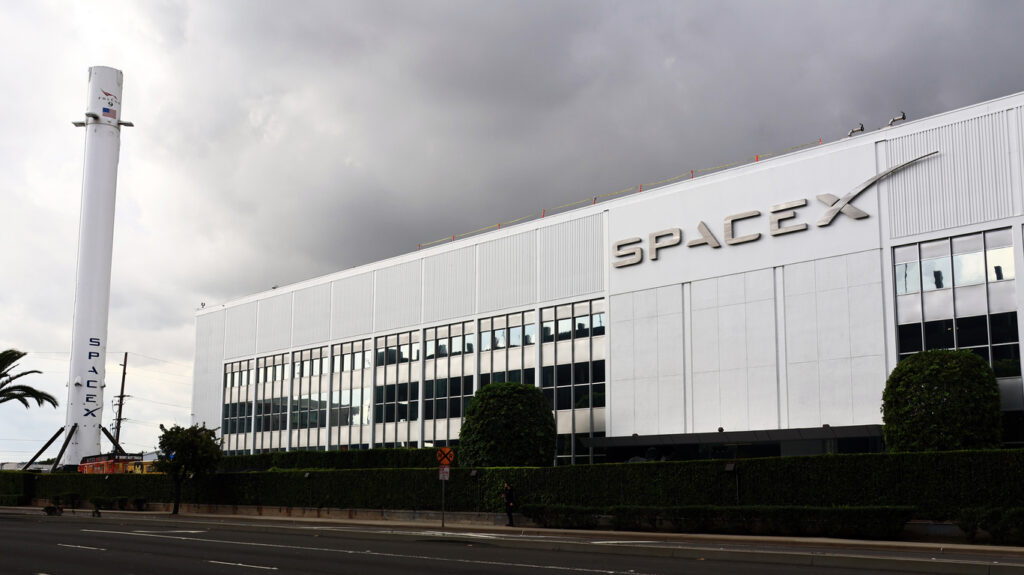
SpaceX Goes Public: Listing, Lockup, Index Inclusion, and What Drives the Stock

Strong Earnings, Weaker Stocks: Why Hyperscaler Results Aren’t Pleasing the Market

Is AI Out Over Its Skis?

The Private Credit Mirage and Unfolding Market Stress
Get In Touch
Contact our team of professionals today.
ADDRESS
3070 Saturn Street, Suite 101. Brea, CA 92821