
SpaceX Goes Public: Listing, Lockup, Index Inclusion, and What Drives the Stock
SpaceX Goes Public: Listing, Lockup, Index Inclusion, and What Drives the Stock
Overview
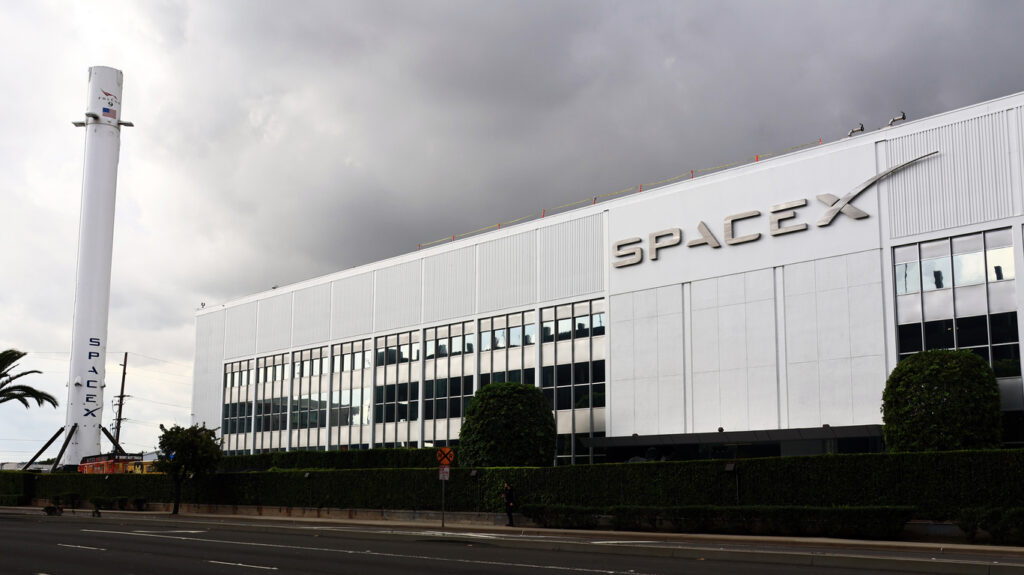
SpaceX is going public in what is set to be the largest IPO in market history. The shares begin trading on Nasdaq on June 12, 2026, under the ticker SPCX at a fixed offer price of $135 per share, implying a valuation near $1.75 trillion. The offering is 556.6 million shares targeting a roughly $75 billion raise. At that valuation SpaceX would debut as one of the ten most valuable U.S.-listed companies, larger than Tesla on day one, despite only a fraction of its shares being available for public trading.
A defining feature of the deal is its unusual retail orientation. SpaceX set aside roughly 20% of its public shares for individual investors, far above the typical 5% to 10% for a mega-IPO, opening retail access through brokers including Robinhood, Fidelity, Charles Schwab, SoFi, and E*TRADE. Demand has been heavy: when the institutional order books closed on June 10, the offering was running roughly three and a half to four times oversubscribed, with reported orders surpassing $250 billion against the $75 billion raise.
The central thing to understand is that the SpaceX story has two engines working at once. On the supply side, a very small float and a staggered lockup control how many shares actually reach the market and when. On the demand side, listing and index inclusion are separate events on very different clocks, with the index events forcing large mechanical buying. The interaction between thin, scheduled supply and concentrated, forced demand is what will drive the stock in its first year, far more than the underlying business.
A Very Thin Float to Begin With
The float, meaning the shares actually available to trade, starts very small. The IPO covers only about 4% to 4.25% of the company. A small float against heavy demand can push the opening price sharply higher, but it also makes the stock far more volatile, because relatively small amounts of buying or selling move the price more than they would in a stock with a large float. Buying on day one means buying into the thinnest, most reactive supply the stock will ever have.
That float does not stay fixed. It grows gradually as a staggered lockup releases insider shares over the first 180 days, so understanding the lockup is essential to understanding how supply, and therefore price pressure, evolves through the rest of the year.
How SpaceX’s Staggered Lockup Works
Two things matter about the numbers. First, they are percentages of each insider’s own holdings. Instead of the single expiration date most IPOs use, SpaceX built a rolling schedule that releases insider shares in stages over the first 180 days. First, the percentages below are of each insider’s own holdings becoming eligible to sell, not percentages of the whole company hitting the market. Second, eligible to sell is not the same as sold. How much stock actually reaches the market depends on how many holders choose to take profits at each window.
With that in mind, the schedule for the shareholders covered by it runs roughly as follows: 20% of a holder’s shares after the second-quarter earnings report, an additional 10% if the stock trades at least 30% above its IPO price for five of the 10 trading days after that report, then 7% tranches at the 70, 90, 105, 120, and 135-day marks, a further 28% after the third-quarter earnings report, and the remainder at the 180-day point in early December.
How the Lockup Differs Across Groups of Investors
The lockup treats different groups very differently, which shapes when supply enters the market.
Private and early investors are bound by the full staggered schedule above. This group carries the largest profit incentive, since many have held since the company was valued at a small fraction of its current level, so they are the most likely source of selling once the early windows open.
Employees, both current and former, fall under the same staggered schedule, giving them several opportunities to sell across the first 180 days rather than a single window. Separately, participants on SpaceX’s “friends and family” list, which can include selected employees and relatives of executives, are not subject to the standard selling restrictions, giving that smaller group earlier flexibility.
The largest and most significant investors are held back far longer. Elon Musk and certain significant investors are locked up for at least 366 days, and more than 60% of pre-IPO shares sit under an extended lockup, with Musk retaining roughly 82.4% of voting power. This keeps the biggest blocks of stock off the market through the volatile first year.
Mutual funds that already own private SpaceX shares are another group bound by the lockup. Several public funds, including the Fidelity Contrafund, the Baron Partners Fund, and the ARK Venture Fund, bought private shares over the years, and when the company goes public, those shares do not become freely tradable at the open. The large stakes these funds hold cannot be sold on day one, even if a manager wanted to, and instead fall under the same staggered release schedule that runs over the first 180 days. The exact timing can differ depending on how the shares were acquired: funds that own SpaceX directly are bound by the staggered schedule on those shares, while funds holding the company indirectly through a special purpose vehicle continue to hold the vehicle until its own lockup expires, after which it converts to regular tradable stock. It is worth noting that not every existing holder is a potential seller: Ron Baron, a longtime backer whose funds hold large SpaceX positions, has said he plans to buy roughly another $1 billion of stock at the IPO if he can get filled, so for some funds the lockup governs a position they intend to add to rather than exit.
New buyers in the IPO or on the open market are not subject to any lockup at all. They can trade freely from the first day. For them, the lockup is not a restriction but a calendar of future supply events that will affect the price.
The Demand Side: Listing Versus Index Inclusion
Just as important as supply is understanding what creates demand, and here it helps to separate three events that are easy to conflate. Listing on Nasdaq is immediate. Nasdaq-100 inclusion is a matter of weeks. S&P 500 inclusion is at least a year away and conditional on profitability the company has not yet achieved. Only the index events force buying.
Event 1: Nasdaq Listing (June 12, 2026)
This is the settled part. On June 12, SPCX becomes publicly tradable on Nasdaq at the $135 offer price, with pricing locked the prior evening. Listing alone carries no forced institutional buying. It simply makes the shares available. All the index-driven flows below are distinct from this step.
Event 2: Nasdaq-100 Inclusion (around early July 2026)
Nasdaq revised its index methodology in a way that directly accommodates a company of this profile. Effective May 1, 2026, any newly listed company ranked among the top 40 by market capitalization can enter the Nasdaq-100 after just 15 trading days, with the prior free-float requirement eliminated. That timeline points to SpaceX entering the index around July 6, 2026.
Inclusion is significant because it triggers mechanical buying. Funds tracking the Nasdaq-100, most notably the Invesco QQQ Trust (roughly $496 billion in assets) and the lower-cost QQQM (roughly $98 billion), become required buyers of SPCX shares to match the index. This forced demand arrives only weeks after the listing. Because these funds do not have a choice about whether to buy, the inclusion event concentrates a large amount of purchasing into a short window, which is what makes index entry such a powerful catalyst compared with the listing itself.
It is worth noting that this inclusion lands at roughly the same time as the first major lockup release tied to second-quarter earnings, so a wave of forced index buying may arrive alongside the first wave of insider selling, which is part of why the early weeks are so hard to predict.
Event 3: S&P 500 Inclusion (mid-2027 at the earliest, and conditional)
On June 4, 2026, S&P Dow Jones Indices announced it would not change its eligibility criteria, retaining both the 12-month seasoning period and the profitability requirement. To join the S&P 500, a company must be profitable under Generally Accepted Accounting Principles (GAAP) in its most recent quarter and across the most recent four quarters combined.
That profitability bar is the binding constraint. SpaceX posted a net loss of $4.94 billion in 2025, even as revenue rose 33% to $18.67 billion. As a result, the earliest possible eligibility window shifts to roughly June 2027, and that assumes SpaceX turns profitable in the interim, which analysts view as uncertain. Some project profitability may not arrive until later in 2027. The passive inflows tied to eventual S&P 500 inclusion are estimated at around $14 billion.
Notably, S&P made this decision deliberately and against industry pressure, having consulted investors about waiving these very requirements before declining. Its stated position was that exceptions to financial-viability, seasoning, and weighting rules should not be granted based on market capitalization alone.
Effect on the Stock
The strongest predictable force around these events is not fundamental but mechanical flow against a small float. The relevant historical template is Tesla’s 2020 entry into the S&P 500.
In the early IPO window, expect technical dominance. A small free float against broad global demand can force a sharp opening premium, and the heavy retail allocation combined with the oversubscribed book points to elevated short-term volatility in the first weeks of trading.
Around index inclusion specifically, the documented pattern is “front-run, then exhaust.” When Tesla’s S&P 500 inclusion was announced in November 2020, the stock popped on the news, ran roughly 70% higher into the inclusion date as front-running money piled in, peaked at the inclusion print on concentrated passive buying, and then traded sideways-to-down for weeks as that money exited. SpaceX represents the same setup with two amplifiers: a much lower float than Tesla had in 2020, and the new 15-day fast-entry rule for the Nasdaq-100. Both compress the front-run-and-exhaust pattern into a tighter, sharper window.
Layered on top of all, this is the lockup. The staggered schedule adds new supply at specific, predictable moments. Each release point, especially the larger ones tied to the second and third-quarter earnings reports, is a moment when more shares can enter the market and create selling pressure. Because the dates are known in advance, the stock can weaken even in the days leading up to a release as traders’ position for it. A day-one buyer is therefore buying ahead of a series of scheduled events that each tend to add downward pressure.
The blocked S&P 500 entry also creates a second, delayed catalyst sitting out in 2027. If SpaceX reaches GAAP profitability by mid-2027, inclusion will bring a fresh wave of $50 billion-plus in forced buying, a known overhang that sophisticated traders are likely to position ahead of well in advance.
One structural critique is worth keeping in view: some passive-investing critics characterize the accelerated index-inclusion rules as a “grift,” in which issuers and bankers benefit from guaranteed buy demand at premium valuations while ordinary index-fund investors absorb the rebalancing cost.
What This Means for an Investor Considering SpaceX
For a client weighing whether and when to buy, the takeaway is that the June 12 open is likely to be driven by supply and demand mechanics rather than the underlying business, and that the price may face repeated pressure as the lockup tranches release through the rest of the year. The stock launches with the thinnest float it will ever have, sees a burst of forced index demand within weeks, and then meets a series of scheduled supply releases stretching into December, with a further potential index catalyst out in 2027.
Several analysts suggest the most attractive entry may come later, after the bulk of insider selling has worked through the market, rather than chasing the stock at the open when the float is thinnest. That is a view about timing, not a guarantee, and a thin float can move the price down just as sharply as up. Clients who want exposure but prefer to avoid first-day volatility may also note that several mutual funds already hold SpaceX, offering an indirect route.
Summary
The sequence is straightforward to track. The Nasdaq listing happens on June 12, 2026. Nasdaq-100 forced buying arrives around early July, alongside the first major lockup release. The lockup then releases insider shares in stages through early December. S&P 500 inclusion is, at minimum, a year out and contingent on SpaceX becoming GAAP-profitable on a schedule analysts are not sure about. In the near term, SPCX is best understood as a float-and-flow story rather than a fundamentals story. Its price action will be driven largely by the interaction of a thin, gradually expanding float with concentrated, mechanical index demand, with fundamentals unlikely to get a clear read until the first quarterly report, expected around September 2026.
Related Articles
SpaceX Goes Public: Listing, Lockup, Index Inclusion, and What Drives the Stock
Strong Earnings, Weaker Stocks: Why Hyperscaler Results Aren’t Pleasing the Market

Is AI Out Over Its Skis?

The Private Credit Mirage and Unfolding Market Stress
Get In Touch
Contact our team of professionals today.
ADDRESS
3070 Saturn Street, Suite 101. Brea, CA 92821